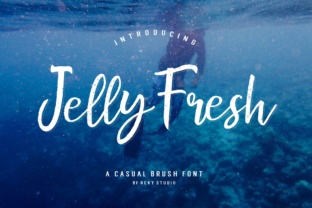
Jelly Fresh: A Cool Textured Font for Brand Identity
Last Tuesday, I was staring at a stack of blank candle jars and a half-finished logo concept that just didn't feel right. The business had grown from a weekend market stall to a small online shop, but the branding still felt stuck in the past. It looked generic, like every other handmade product on the shelf. I needed something that screamed "crafted with care" without trying too hard. That is when I discovered Jelly Fresh. It wasn't just another download; it was the missing piece that transformed my packaging design from plain to premium.
As a creative consultant who works closely with small business owners, I often see entrepreneurs struggle with typography. They know their product is high quality, but their fonts don't match that standard. In the world of brand identity, your typeface is your voice. If you are selling artisanal goods, a stiff corporate font sends the wrong message. You need personality. You need texture. You need something that feels human. This is exactly where Jelly Fresh steps in as a powerful tool for modern creators.
The Personality Behind the Pixels
Jelly Fresh is not your average digital typeface. At first glance, it looks like a cool textured brush font, but the magic lies in its imperfections. Unlike standard computer-generated scripts that look too perfect and sterile, Jelly Fresh has an irregular baseline and a completely handmade aesthetic. It mimics the natural flow of a brushstroke or a marker pen gliding across paper. For a small business owner, this visual character is gold.
When I applied Jelly Fresh to the labels for those candle jars, the difference was immediate. The texture gave the design depth, making the white labels pop against the amber glass. It felt contemporary yet approachable. The font carries a mood that is playful but polished, which is a delicate balance to strike in editorial design and packaging. It tells the customer, "This was made by a person, for you." That connection is vital for building trust and recognition in a crowded marketplace.
Real-World Applications for Your Business
One of the best things about Jelly Fresh is its versatility. While it shines as a display font for headlines, it fits into a large set of different designs. I have tested it across various mediums, and here is how it performs in real business scenarios:
- Packaging Design: Whether it is a bakery box, a skincare bottle, or a boutique tag, Jelly Fresh acts as a standout title. It draws the eye immediately to the product name, creating a memorable first impression.
- Social Media Graphics: On platforms like Instagram, attention spans are short. Using this creative font for story highlights, promotional posts, or sale announcements makes your content stop the scroll. The irregular baseline adds movement that static text lacks.
- Printed Materials: From thank-you cards inserted into shipping boxes to flyers for local events, the font retains its charm when printed. It elevates simple stationery into professional-grade marketing assets.
- Logo Design: Many clients ask if they can use it for a logo. Absolutely. Its unique shape makes it highly recognizable, helping to build a distinct brand identity that stands out from competitors using standard sans serif or serif fonts.
However, it is important to understand where this font belongs. Jelly Fresh is designed for impact. It works best for short phrases, logos, headlines, and decorative accents. It is not intended for long paragraphs of body text. When used correctly as a display font, it guides the customer's eye and emphasizes the most important information without overwhelming them.
Mastering Typography and Readability
A common mistake I see is using complex script fonts everywhere. To maintain a professional look, readability is key. Even though Jelly Fresh is a handwritten font style, it remains legible at reasonable sizes. For mobile screens and social media thumbnails, ensure you have enough contrast between the text and the background. The textured nature of the font means it needs a clean backdrop to shine.
For printed packaging, especially small labels, test the size before mass production. While the font is beautiful, very small text can lose some of its detail. Stick to using Jelly Fresh for the main title or key selling points, and pair it with a cleaner font for the ingredients list or fine print. This hierarchy ensures your customers get the vibe of the brand while still being able to read the necessary details easily.
Perfect Pairings for a Polished Look
No font lives in isolation. To create a cohesive brand identity, you need strong font pairing strategies. Jelly Fresh is bold and expressive, so it needs a partner that lets it breathe. My go-to recommendation is to pair this cool textured brush font with a clean sans serif font. The simplicity of a modern sans serif provides a neutral foundation that allows the personality of Jelly Fresh to take center stage.
Alternatively, if you are aiming for a more elegant, boutique feel, try pairing it with a classic serif font. This combination bridges the gap between modern typography and traditional sophistication. Avoid pairing it with another heavy script font or a handwritten font that competes for attention. The goal is visual consistency, not chaos. By balancing the organic curves of Jelly Fresh with structured letterforms, you achieve a look that is both trustworthy and stylish.
Technical Details and Licensing for Entrepreneurs
Before you integrate any new design asset into your business, there are practical details to consider. Jelly Fresh comes as a commercial font, which is essential for anyone planning to sell products or offer services. Always verify the licensing terms to ensure you are covered for your specific use cases, whether that is for client work, merchandise, or digital downloads.
Check the included file formats to ensure compatibility with your design software. Most users will find OpenType (OTF) or TrueType (TTF) files, which work seamlessly in popular tools like Adobe Illustrator, Canva, and Photoshop. Look for alternates, ligatures, and special characters that might add extra flair to your designs. If you operate internationally, check for multilingual support to ensure your global customers can read your brand name correctly.
Ultimately, upgrading your typography is one of the highest ROI investments a small business can make. It doesn't require a full rebrand or expensive graphic designers. Sometimes, all it takes is finding the right typeface. Jelly Fresh offers that perfect blend of contemporary design and handmade warmth. It helped me turn a stack of blank jars into a cohesive, professional product line, and it can do the same for your business. Whether you are refreshing a menu, updating an online shop banner, or designing your next collection of stickers, giving your brand a voice through great typography is the first step toward looking like the industry leader you are becoming.